
My primary research tracks the perplexing bricolage of leprosy, religious frameworks, and public health structures from medieval Europe to contemporary America while centering the experiences of Native Hawaiian leprosy sufferers in the deeply colonized space of 19th and 20th century Moloka’i, Hawai’i. I argue leprosy operated as a conceptual prism through which Catholic and Mormon rituals/theological anthropology, Native Hawaiian epistemologies, and medical therapeutics were refracted. With Hawai’i as one of the most proximate lenses for studying the ongoing project of America, I also consider the history of Moloka’i vital to understanding contemporary relationships between American religion, public health, and Indigeneity.

Father Damien with Kalawao Girls Choir ca. 1870s
Leprosy, or Hansen’s disease, is a moderately communicable and chronic infectious disease caused by Mycobacterium leprae. Yet for over 100 years, more than 8000 leprosy sufferers fell victim to a draconian policy of permanent segregation–over 90% of whom were Indigenous Hawaiians who renamed the disease “ma’i ho’oka’awale ‘ohana (the sickness that separates family).” My book project, A Horror of Moral Beauty: Leprosy, Catholicism, and Indigenous Health on the Hawaiian Shores of Molokai, illuminates the theological and public health contributions of this Native Hawaiian community, Father Damien de Veuster (the Belgian priest who volunteered to work on Moloka’i before eventually succumbing to the disease himself), and Mother Marianne Cope (a Franciscan nun and former hospital administrator who was a key driver of medical care for leprosy in the Hawaiian islands). I argue that the theologies of Father Damien and Mother Marianne–and the public health policies of the colonial Board of Health–were creatively responsive to the practical realities of leprosy and the insights of Native Hawaiian epistemologies. I conducted unique archival research at the Damiaan Documentatie en Informatiecentrum in Leuven, Belgium. I had the privilege of viewing a number of Father Damien’s personal letters, as well as correspondence from Charles Warren Stoddard, Edward Clifford, and Mother Marianne Cope. The other document that I was especially eager to study is Ambrose Hutchison’s unpublished, handwritten personal memoir. Hutchison, a Native Hawaiian, contracted leprosy and was exiled to Moloka’i as a young boy before eventually becoming the resident superintendent of the entire settlement (the first Native Hawaiian to occupy the position). Hutchison worked closely with Father Damien, and was indeed dear friends with the Belgian priest. I recently had the privilege to share this work when I was invited as the keynote speaker for the 33rd Annual Undergraduate Philosophy and Religion Conference at Truman State University. It was such a treat to dialogue with the brilliant conference participants and to be back at my alma mater.

“Saint Francis and the Lepers,” Santuario di San Francesco, Greccio
Given the enduring appeal to medievalism in global health policies during this time (particularly true in the case of leprosy), this book project builds upon my dissertation, “The Sacramental Sickness: The Symptomatic Relationship between Leprosy and the Sacraments in Historical Theology,” which I completed under the direction of Professor Willemien Otten. In my dissertation, I detail how leprosy–as disease and symbol–has been historically inseparable from a hyper-religious milieu informed by supple theological frameworks and a complex (and occasionally ambivalent) exegetical tradition. I focus on the relationship between stigmatic illness and medieval sacramental theology, particularly the medieval Franciscan interpretation of leprosy alongside the sacrament of the Eucharist. I then propose that “crucial fragments” (a term of theologian David Tracy’s) of the medieval and early-modern past are pregnant with novel constructive possibilities for addressing the moral problems latent in marginalizing illness. I also recognize the tragic sway the figure of the “medieval leper” stills holds upon the popular imagination and the unfortunate linkage between medieval leprosy and contemporary HIV/AIDS. I contend that this generative theological tradition promises fresh insights for crafting more nuanced, ethical responses to contemporary stigmatic illness, e.g., mental illness, HIV/AIDS, neglected tropical diseases, even COVID-19 and mpox. Ultimately, I view the reality (and even symbol) of leprosy as triggering a hermeneutical frontier: a space of supple interaction where medical epistemologies, metaphysics, and Indigenous epistemologies renegotiated boundaries.
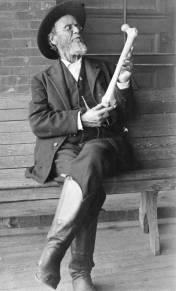
Dr. A.T. Still (Museum of Osteopathic Medicine)
In my other research project, I analyze the development of osteopathic medicine on the American frontier. Founded in my hometown of Kirksville, MO, I am interested in how Osteopathy’s founder, Dr. Andrew Taylor Still (1828-1917), drew upon the Indigenous therapeutics and medical epistemology of the Shawnee to develop an approach to patient care more attuned to mind-body and psychosocial interrelationships. As one of the oldest osteopathic medical schools in the country, Des Moines University is an ideal setting in which to continue this project.
Featured image: Letter from Mother Marianne Cope to Father Damien De Veuster (photo by author)
 Mark M. Lambert